Thinking about a career in dental nursing but not sure where to begin?
You're not alone. Every year, thousands of people across the UK — school leavers, career changers, healthcare assistants — discover that dental nursing is one of the most accessible, rewarding, and underrated careers in the profession. You can start without a degree. You can earn while you learn. And within 18 months, you can be a GDC-registered professional with real career momentum behind you.
This guide covers everything: the entry requirements (or lack of them), the two main training routes, GDC registration, what you'll earn at every stage, and where your career can go from there. Whether you're considering it for the first time or ready to take the next step, this is the most complete picture available for 2026.
What Does a Dental Nurse Actually Do?
Before committing to any career, it helps to understand what the day-to-day reality looks like — not the glossy job description, but the actual work.
A dental nurse works alongside dentists, hygienists, and orthodontists to ensure every patient appointment runs safely and smoothly. In practice, that means:
- Preparing and sterilising instruments and equipment before each appointment
- Assisting the dentist chairside during procedures — passing instruments, managing suction, monitoring the patient
- Supporting patients who are anxious or in pain, keeping them calm and informed
- Maintaining accurate patient records and clinical notes
- Ensuring the surgery meets strict infection control standards
- Stocking and ordering dental materials
It's a role that blends clinical precision with genuine human care. You'll work under pressure, manage multiple tasks at once, and make a direct difference to how patients experience the dentist — often at their most nervous.
Do You Need Qualifications to Get Started?
This is the question most people ask first — and the answer is more encouraging than you might expect.
To start as a trainee dental nurse, you do not need any prior qualifications. No GCSEs, no A-levels, no healthcare experience. Most practices look for enthusiasm, reliability, good communication, and a genuine interest in patient care. Those qualities outweigh grades at the entry level.
However, to work as a qualified dental nurse in the UK, you must eventually hold a GDC-recognised qualification and register with the General Dental Council. This is not optional — it is a legal requirement. The good news is that you earn this qualification while working, not before.
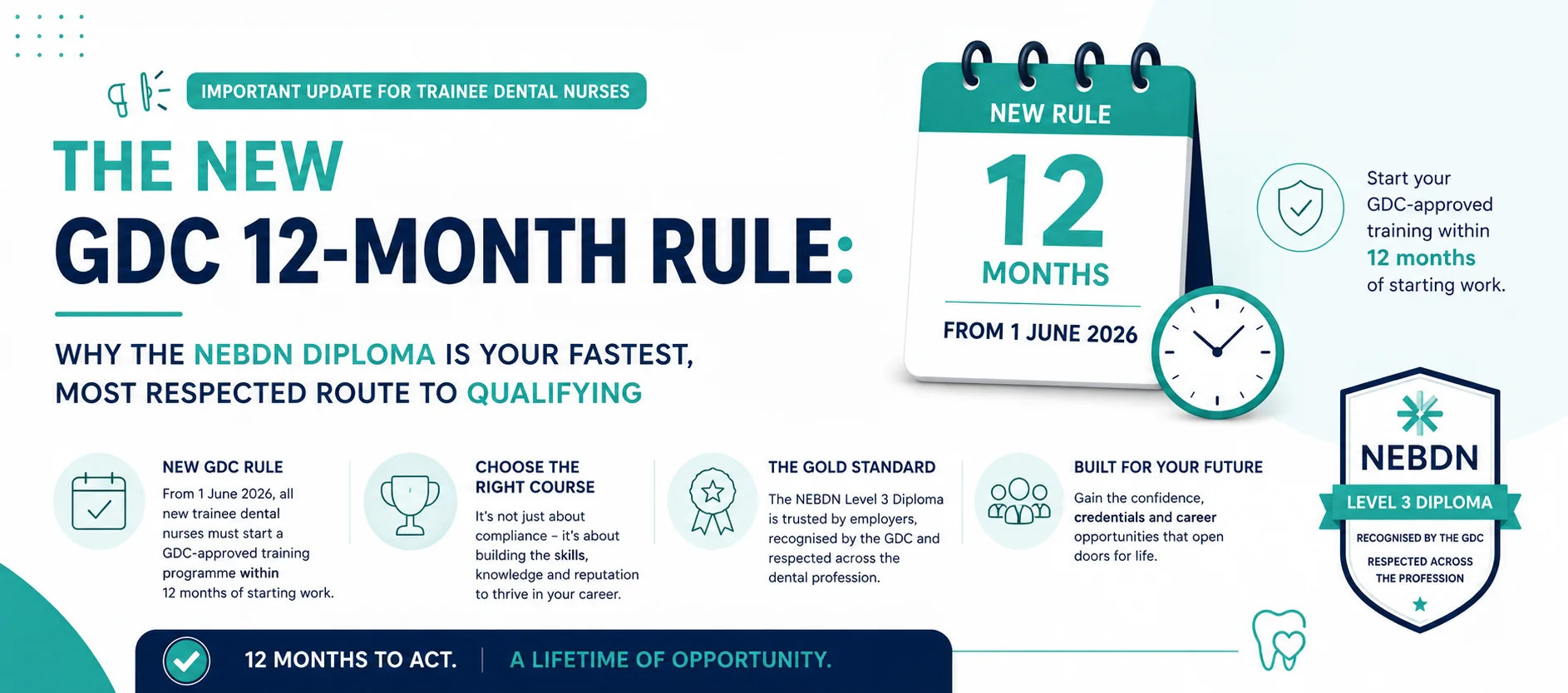
Important update for 2026: As of 1 June 2026, all new trainee dental nurses must start a recognised training programme within 12 months of beginning work in a dental practice. This is a new GDC requirement — so if you start as a trainee today, you'll need to enrol in a course within your first year.
The 5 Steps to Becoming a Qualified Dental Nurse
Step 1: Find a Trainee Dental Nurse Position
Your journey starts with getting into a dental practice. You can't complete your training in a classroom alone — you need real clinical experience alongside real patients, and that means being employed (or placed) in a working surgery.
When applying for trainee roles, you don't need a perfect CV. Focus on showing:
- Reliability — dental practices run on tight appointment schedules
- Communication skills — you'll be talking to anxious patients all day
- A genuine interest in dentistry — even basic knowledge of dental procedures shows initiative
- Teamwork — you'll work closely with dentists, hygienists, and reception staff
Many dental practices actively prefer to hire trainees and train them from scratch rather than inherit someone else's habits. This works in your favour.
👉 Browse current trainee dental nurse vacancies across the UK
Step 2: Choose Your Training Route
There are two main GDC-recognised routes to becoming a qualified dental nurse in the UK. Both lead to the same outcome — registration as a dental nurse on the GDC's Dental Care Professionals register — but they work differently.
Route A: NEBDN Level 3 Diploma in Dental Nursing
The National Examining Board for Dental Nurses (NEBDN) Level 3 Diploma is the most widely recognised dental nursing qualification in the UK. It combines online learning with practical experience in your dental practice, culminating in a written examination held in April or November each year.
- Duration: Approximately 15–18 months
- Exams: Written exam (NEBDN) — you have up to four attempts from January 2026
- Who it suits: Those who prefer structured online learning alongside practical work
- Cost: Varies by training provider; some practices contribute to or cover the cost
Route B: Level 3 Dental Nursing Apprenticeship
The Level 3 Dental Nurse Apprenticeship is an increasingly popular route, particularly for those who want a fully employer-funded pathway. The NEBDN Level 3 Diploma (integrated Apprenticeship) combines the qualification and End-Point Assessment into one programme.
- Duration: 12–24 months
- Pay: You receive an apprenticeship salary throughout — you are employed from day one
- Requirements: You'll need English and Maths at Level 2 (GCSE grade 4/C equivalent), either already achieved or completed alongside the programme
- Who it suits: Those who want employer funding and a structured workplace learning programme
- Cost to you: Free — funded by the government apprenticeship levy
Which route is right for you? If your employer offers apprenticeship funding, take it — there is no financial advantage to the diploma route. If you're already working in a practice and your employer isn't set up for apprenticeships, the NEBDN diploma is equally respected and leads to the same registration.
Step 3: Complete Your Qualification
Whichever route you take, your training will combine two elements:
- Clinical log books and records of experience
Throughout your training you'll document real patient cases, procedures you've assisted with, and clinical skills you've developed. These portfolios are assessed as part of your qualification. - Written examinations
The NEBDN written exam tests your knowledge across dental science, infection control, radiography, patient care, and dental materials. It's rigorous but very passable with consistent study — most candidates who prepare properly pass first time.
During this period, you are a student registrant with the GDC, which means you're legally permitted to work chairside as a trainee under supervision. Your practice must be registered with the GDC as a training environment.
Step 4: Register with the GDC
Once you've passed your qualification, you can apply for full registration with the General Dental Council (GDC) — the body that regulates all dental professionals in the UK.
Registration requirements:
- A GDC-approved Level 3 dental nursing qualification
- Evidence of English language proficiency (if applicable)
- A Disclosure and Barring Service (DBS) check
- Professional indemnity insurance
- Payment of the GDC registration fee (currently £108 per year for dental nurses)
Without GDC registration, you cannot legally practise as a qualified dental nurse in the UK. Registration is renewed annually and requires 150 hours of Continuing Professional Development (CPD) over each five-year cycle — keeping your skills and knowledge current throughout your career.
Useful resource: GDC Registration — gdc-uk.org
Step 5: Start Your Career as a Qualified Dental Nurse
Passing your qualification and achieving GDC registration is the moment everything changes. You move from trainee to professional — with a different pay grade, greater responsibility, and a credential that's valid across every dental practice in the UK.
From here, you can stay with the practice that trained you, apply for roles that better match your interests (NHS, private, orthodontic, paediatric, hospital-based), or begin working towards specialist qualifications that open even higher salary brackets.
How Long Does It Take?
|
Stage |
Timeline |
|
Find a trainee position |
2–8 weeks (job search) |
|
Complete Level 3 Diploma or Apprenticeship |
15–24 months |
|
GDC registration processing |
4–8 weeks |
|
Total: trainee to qualified dental nurse |
Approximately 18–24 months |
From the moment you decide to pursue dental nursing, you could be a fully GDC-registered professional within two years. For a healthcare qualification, that's remarkably fast.
How Much Will You Earn?
One of the most asked — and least transparently answered — questions about dental nursing. Here's the honest picture for 2026.
As a Trainee Dental Nurse
£14,000 – £22,000 per year (approximately £10.00–£10.80/hour)
Pay varies significantly by location and practice type. London trainees typically earn at the higher end; practices in smaller cities may offer closer to minimum wage. Apprenticeship salaries are sometimes lower in the early months but rise with progression.
As a Newly Qualified Dental Nurse
£23,000 – £27,000 per year
On the NHS, newly qualified nurses typically start on Band 3 (£24,071 in 2026) and can progress to Band 4 (£25,147 – £27,596) with experience and additional responsibilities.
In private practice, starting salaries tend to be slightly higher — often £25,000–£30,000 — with faster progression potential.
As a Senior or Specialist Dental Nurse
£30,000 – £39,000+ per year
Senior nurses with specialist qualifications in sedation, orthodontics, implant nursing, or radiography command significantly higher salaries. Implant nursing in private practice can reach £34,000+. Practice managers who started as dental nurses often earn £38,000–£48,000.
What Happens After You Qualify? Career Progression
Qualifying as a dental nurse is not an endpoint — it's a launchpad. The profession offers a genuine progression pathway for those willing to invest in additional training.
Specialist Qualifications (Post-Registration)
Once registered, you can take NEBDN certificates in:
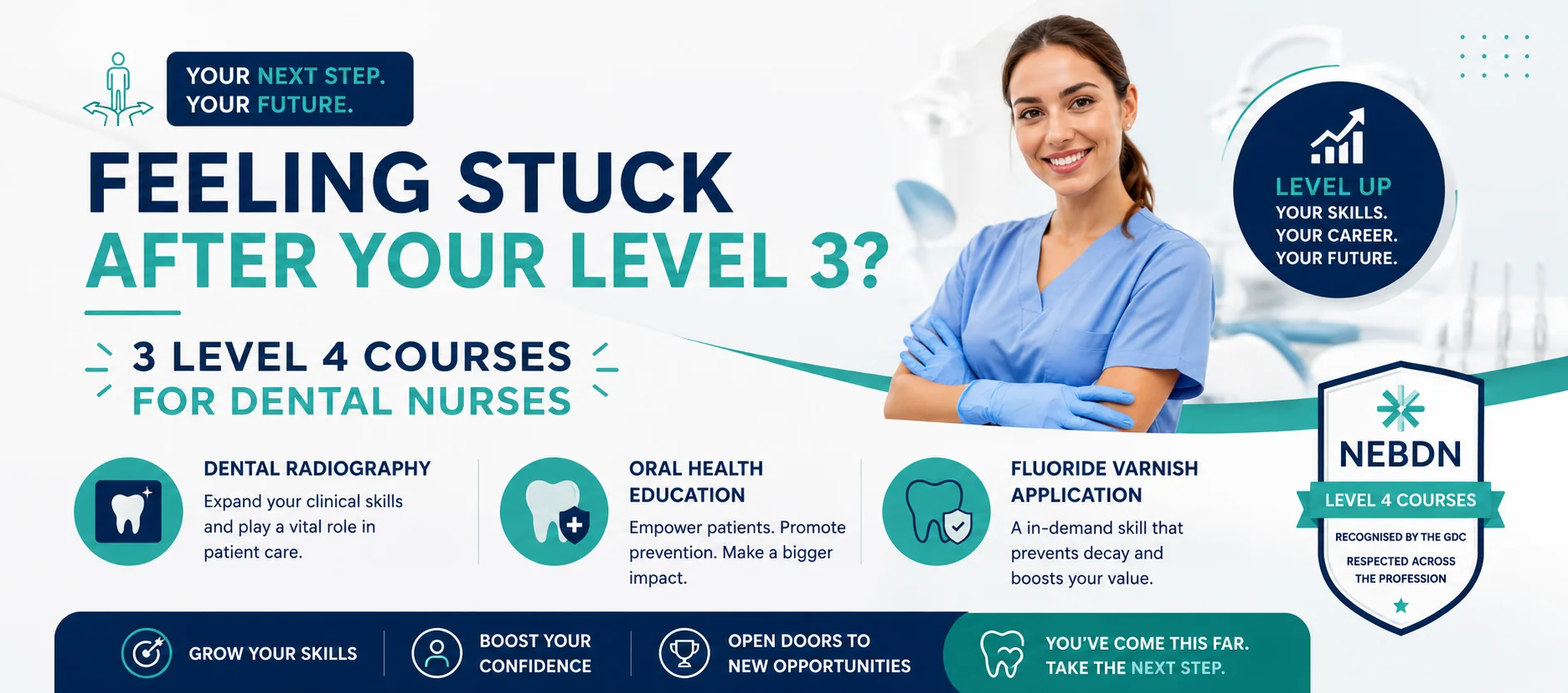
- Dental Radiography — one of the most in-demand skills; opens doors in most practice types
- Oral Health Education — allows you to deliver patient education and preventative care sessions
- Orthodontic Nursing — specialist work with braces, aligners, and orthodontic appliances
- Conscious Sedation — supporting patients who require sedation for dental procedures
- Implant Nursing — assisting in implant placement and restoration, typically in private practice
- Fluoride Varnish Application — a quick additional qualification that broadens your clinical scope
Each additional certificate typically adds £1,000–£3,000 to your base salary and significantly improves your employability.
Where Can It Lead?
The dental nurse career ladder looks like this:
Trainee Dental Nurse → Qualified Dental Nurse → Senior/Lead Dental Nurse → Specialist Dental Nurse → Practice Manager / Dental Therapist / Dental Hygienist
Those who want to expand their scope of practice further can retrain as a dental hygienist or dental therapist — roles that allow independent patient treatment and carry significantly higher salaries (£35,000–£55,000+).
Is Dental Nursing the Right Career for You?
Dental nursing suits people who:
- Enjoy working directly with people — every day brings different patients with different needs
- Thrive in a clinical environment — precision, cleanliness, and attention to detail matter enormously
- Want job security — dental care is an essential service; dental nurses are always in demand
- Like variety — no two days are the same in a busy dental practice
- Want a healthcare career without a three-year degree — dental nursing is one of the fastest routes into a regulated healthcare profession
It's worth being honest about the challenges too. The role can be physically demanding (standing for long periods), emotionally taxing (supporting anxious or distressed patients), and salaries at the entry level are modest. But for those who find their footing in the profession, the combination of career security, progression potential, and daily human connection makes dental nursing genuinely fulfilling work.
Frequently Asked Questions
Do I need GCSEs to become a dental nurse?
No formal academic qualifications are required to start as a trainee dental nurse. For the apprenticeship route, you'll need English and Maths at Level 2 (GCSE grade 4 or equivalent), but you can achieve these alongside your training.
Can I work as a dental nurse without GDC registration?
No. Working as an unregistered dental nurse in the UK is illegal. You must be either a registered student (trainee) or a fully GDC-registered dental nurse to work in a clinical role.
How much does it cost to train as a dental nurse?
The apprenticeship route is fully funded — it costs you nothing. The NEBDN diploma route varies by provider, typically ranging from £1,500 to £3,000. Some dental practices cover this cost for their trainees.
Can I become a dental nurse if I'm a career changer?
Absolutely. There is no upper age limit, and many of the best dental nurses are career changers who bring communication skills, life experience, and a calm manner that is enormously valuable in a clinical setting.
How do I find a trainee dental nurse job?
Start by browsing dedicated dental job boards rather than general job sites — you'll find roles better matched to your level and location.
👉 Find trainee dental nurse jobs near you
Ready to Take the First Step?
The path to becoming a dental nurse is clearer and more accessible than most people realise. You don't need a degree, you don't need years of experience, and you don't need to give up your income to study full-time. You need a trainee position, a recognised training programme, and the commitment to see it through.
The first step is finding that trainee role. Dental Job Online lists current vacancies across London and the UK — from full-time positions in busy city practices to part-time roles that work around other commitments.
👉 Browse dental nurse jobs across the UK — apply free
Sources and further reading:
- GDC Registration — General Dental Council
- NEBDN Level 3 Diploma in Dental Nursing
- Level 3 Dental Nurse Apprenticeship — GOV.UK
- Dental Nurse Salary UK 2026 — dental-tutors.com
- Complete Dental Nurse Career Guide 2026 — School of Dental Nursing